Why This Blog Talks About Life as Much as Money
Introduction
At first glance, mixing finance with reflections on life can feel a bit odd. They seem like two completely separate worlds. I used to think so too.
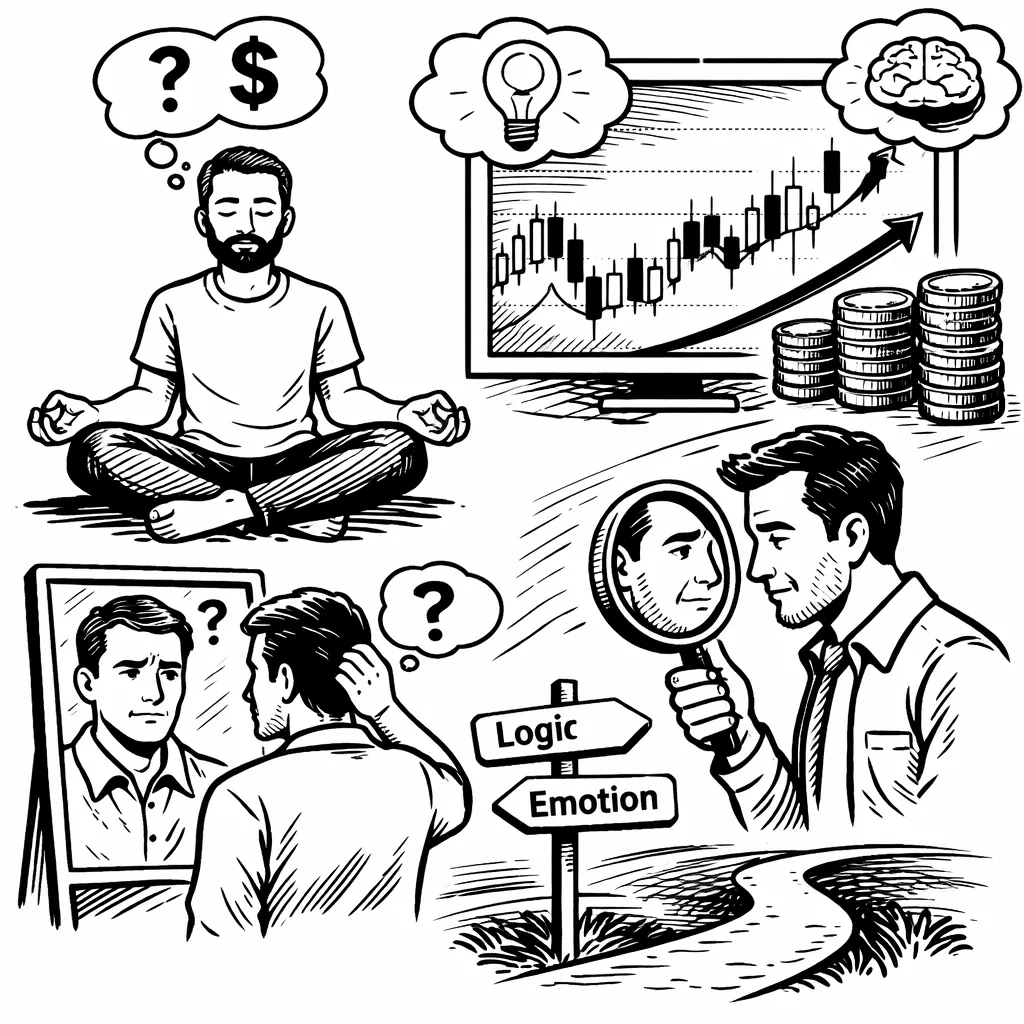
But over time, that separation starts to break down. The way we think about money—how we invest, how we react to markets, how we handle uncertainty—is deeply tied to how we see the world and ourselves.
You Don’t Trade Markets—You Trade Beliefs
The late Van K. Tharp, a trading coach and psychologist, put it simply: “You don't trade the markets, you trade your beliefs about the markets.”
The more you sit with that idea, the more it rings true.
Take something as basic as analysing a stock. Most of us look at charts—candlesticks, lines, indicators—and make decisions based on what we see. But the stock itself isn’t the chart. The chart is just a model, a simplified representation shaped by how we believe the market behaves.
In other words, we’re not reacting to reality directly. We’re reacting to our interpretation of it.
Strategy Is Personal
There’s no shortage of investment strategies out there. Short-term, long-term, trend-following, contrarian—the list goes on.
But what do these terms really mean? Ask ten different investors and you’ll likely get ten different answers. That’s because each approach is filtered through personal belief and experience.
This is where psychology becomes critical. A strategy isn’t just something that works on paper—it has to work for you. It has to align with how you think, how you handle risk, and how you respond under pressure.
When a Good System Fails You
Plenty of investment systems are sound in principle, yet not everyone succeeds with them. The reason is often simple, but uncomfortable: misalignment.
If a strategy clashes with your natural tendencies, you’ll find ways—consciously or not—to undermine it. You might abandon it at the worst possible time, hesitate when action is needed, or overreact to normal market movements.
It can start to feel personal, as if the market is working against you. But more often than not, it’s a mismatch between your beliefs and the system you’re trying to follow.
The Psychology Parallel
This isn’t unique to investing. In competitive sports, athletes eventually reach a point where physical skill alone isn’t enough. Progress then depends on getting the mental side right. That’s why sports psychologists play such a key role at the highest levels.
The same principle applies here. Investing is as much a mental game as it is a technical one.
Learning How You Behave
Most of us enter the markets without a clear understanding of ourselves. We focus on strategies, tips, and data, but overlook the one constant in every decision: our own behaviour.
Over time, patterns begin to emerge—how we react to losses, how we handle uncertainty, when we hesitate, when we act too quickly. The challenge is that outcomes often take time to show up, making these patterns harder to spot.
But with patience and honest reflection, you can start to connect behaviour with results. From there, small adjustments become possible. Done consistently, this process builds a clearer picture of where you fit within the financial markets.
More Than Just Markets
This is why this blog won’t just be about investing. It will also explore ideas about life, behaviour, and belief. Not for the sake of abstraction, but to better understand how we make decisions.
Sometimes that means questioning long-held assumptions. If a belief no longer serves you—especially in the context of investing—it’s worth re-examining, and if necessary, letting it go.
A Final Note
Everything here reflects my own beliefs and experiences. They work for me, but they may not work for you—and that’s perfectly fine.
The goal isn’t agreement. It’s clarity.